Oops! Avoid These Common Vow Mistakes and Say 'I Do' to a Flawless Ceremony
Oops! Avoid These Common Vow Mistakes and Say 'I Do' to a Flawless Ceremony
Your wedding day is approaching, and while you're dreaming of the dress, the flowers, and that first dance, there's one crucial element that deserves your utmost attention: your wedding vows. These words, spoken from the heart, are the foundation of your marriage. But crafting and delivering unforgettable vows speeches can be surprisingly tricky. Many couples stumble into common pitfalls that can detract from the magic of the moment. Don't let that happen to you! This guide will illuminate those potential vow mistakes, providing you with actionable tips and insights to ensure your wedding vows are truly flawless.
If you want help turning your ideas into polished wording, ToastPal guides you through a few questions and delivers editable wedding vows drafts in minutes.
The Pitfalls of Procrastination: Starting Too Late
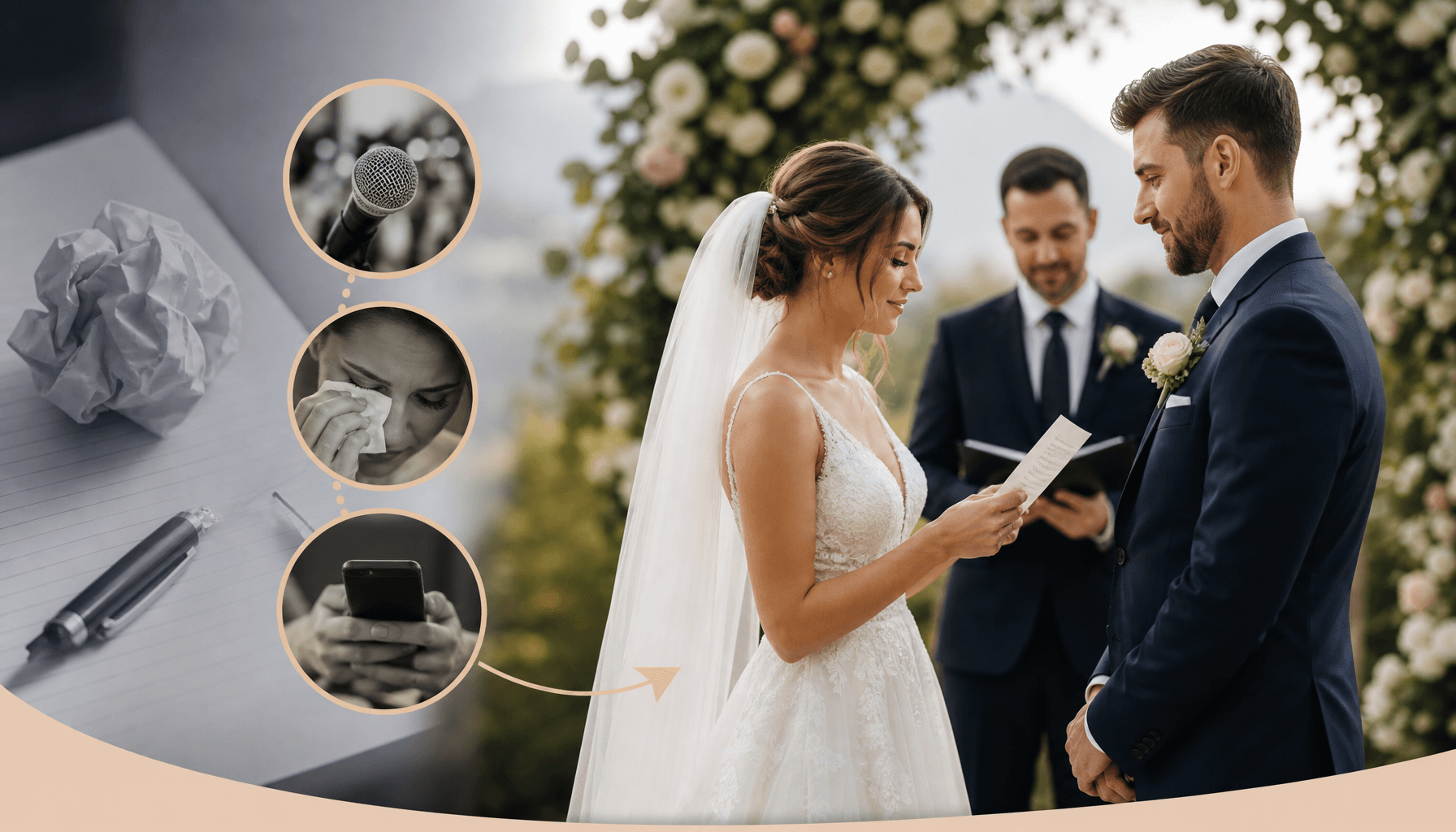
One of the most frequent vow mistakes couples make is simply waiting too long to start writing. Life gets busy, wedding planning intensifies, and suddenly, you're a week away from the big day with nothing but a blank page staring back at you. This leads to rushed, generic vows that lack the personal touch and heartfelt emotion that should be at the core of your commitment. According to a recent survey by Brides.com, nearly 40% of couples admitted they felt rushed while writing their vows speeches. This often results in feelings of regret afterward.
Actionable Tip: Begin brainstorming your vows at least 2-3 months before your wedding. This allows ample time for reflection, drafting, revising, and practicing. Break the process down into manageable chunks. Dedicate specific days or evenings to brainstorming, writing, and editing. Early planning is key to creating meaningful wedding vows. Consider setting a series of milestones – initial brainstorming session by [Date], first draft complete by [Date], final revisions completed by [Date].
- Brainstorming Questions: What are your favorite memories together? What qualities do you admire most in your partner? What promises do you want to make for the future?
- Early Drafts: Don't worry about perfection initially. Just get your thoughts down on paper.
Falling into the Trap of Generic Promises and Clichés
Another common misstep is relying on generic phrases and overused clichés. While phrases like "I promise to love you forever" are nice, they lack the depth and personal connection that makes vows speeches truly impactful. Consider this: a study published in the Journal of Social and Personal Relationships found that couples who express more specific and personalized sentiments in their wedding vows report higher levels of marital satisfaction in the years following their wedding. Generic vows can come across as insincere or uninspired, detracting from the emotional impact of the ceremony. This is a big vow mistake.
Actionable Tip: Ditch the clichés and focus on what makes your relationship unique. Share specific anecdotes, inside jokes, or personal promises that reflect your shared history and future aspirations. For example, instead of saying "I promise to always support you," try "I promise to be your biggest cheerleader, celebrating your victories and offering a shoulder to lean on during challenges, just like you were for me when I decided to pursue my dream of [X]." Adding these personalized details elevates your wedding vows from ordinary to extraordinary.
- Example of a Generic Vow: "I promise to love you in sickness and in health."
- Example of a Personalized Vow: "I promise to hold your hand during every doctor's appointment, to research every treatment option, and to be your unwavering advocate for your well-being, just like you were for my grandmother during her illness."
Forgetting to Practice: The Importance of Rehearsal
Even the most beautifully written vows speeches can fall flat if delivered poorly. Many couples underestimate the importance of practicing their vows aloud. Nervousness, coupled with unfamiliar wording, can lead to stumbling over words, mumbling, or rushing through the speech. This detracts from the emotional impact and can make it difficult for your partner and guests to fully appreciate your heartfelt words. It is a frequent vow mistake.
Actionable Tip: Practice your vows speeches repeatedly, both alone and in front of a trusted friend or family member. This will help you become more comfortable with the wording and delivery. Pay attention to your pace, tone, and volume. Record yourself practicing and listen back to identify areas for improvement. During your rehearsal, practice maintaining eye contact with your partner and speaking from the heart. Consider doing a “dress rehearsal” where you wear something similar to your wedding attire to get used to speaking in the clothes you will wear during your actual ceremony.
- Practice Techniques: Use a mirror to observe your facial expressions.
- Feedback is Key: Ask your practice audience for honest feedback on your delivery.
Neglecting to Coordinate with Your Partner: Ensuring a Unified Tone
Another potential pitfall is failing to coordinate with your partner regarding the tone, length, and content of your vows. Imagine one partner delivering a lighthearted, humorous speech while the other presents a deeply serious and emotional declaration. This disconnect can create an awkward and unbalanced moment. This lack of coordination is a common vow mistake that can easily be avoided. While maintaining an element of surprise is nice, agreeing on some general guidelines ensures a cohesive ceremony.
Actionable Tip: Have an open and honest conversation with your partner about your expectations for your vows speeches. Discuss the overall tone you want to create, the length of your speeches, and any specific topics you want to address or avoid. This doesn't mean you have to reveal every detail of your vows, but it ensures you're both on the same page and that your speeches complement each other beautifully. For example, you might agree to both include a funny anecdote, a specific promise about the future, or a shared value that is important to your relationship.
- Key Discussion Points: Tone (serious, humorous, sentimental), Length (approximate word count or time limit), Content (specific themes or promises).
- Compromise is Essential: Be willing to compromise to find a balance that works for both of you.
Overlooking the Importance of the "Promise" Element
Wedding vows aren't just about expressing your love; they are about making promises for the future. A frequent vow mistake is focusing too much on past memories and feelings, while neglecting to articulate the specific commitments you are making to your partner. While reminiscing about your journey together is beautiful, it's equally important to outline how you intend to support, cherish, and grow with your partner in the years to come. Vows should be forward-looking declarations of intent, creating a roadmap for your shared future.
Actionable Tip: Ensure your vows speeches include specific, actionable promises that reflect your commitment to your partner's happiness and well-being. These promises should be realistic, meaningful, and tailored to your individual relationship. Consider promises related to communication, support, respect, intimacy, and shared goals. For example, instead of saying "I promise to always be there for you," try "I promise to actively listen to your concerns, to offer my unwavering support, and to create a safe space for you to share your thoughts and feelings, even when it's difficult."
- Promise Categories: Emotional Support, Practical Assistance, Shared Growth, Personal Development.
- Specificity is Key: Avoid vague promises; focus on concrete actions.
Conclusion: Saying 'I Do' to Perfect Vows
Crafting and delivering memorable vows speeches doesn't have to be a daunting task. By avoiding these common vow mistakes – procrastination, clichés, lack of practice, poor coordination, and neglecting the promise element – you can create wedding vows that are authentic, heartfelt, and truly reflective of your unique love story. Start early, personalize your promises, practice diligently, communicate with your partner, and focus on creating a lasting commitment for the future. By following these tips, you can say 'I do' to a flawless ceremony and embark on your married life with a strong foundation of love, trust, and unwavering commitment. Remember, your vows are more than just words; they are the cornerstone of your forever.